Disclaimer: Opinions expressed are solely my own and do not express the views or opinions of my employer
The article is based on developments as of 10 May 2025
Tensions between India and Pakistan, the two nuclear-armed countries, have reached their highest level after the 1999 Kargil conflict. A deadly terrorist attack on 22 April in Pahalgam that killed 26 Hindu tourists has reignited decades-old hostilities. It has now turned into missile strikes, cross-border shelling, air combat and rising civilian casualties that now threaten to destabilise the region.
India’s retaliatory campaign, Operation Sindoor, and Pakistan’s countermeasures, Operation Bunyan-un-Marsoos, have raised fear of a broader confrontation. Global powers are calling for de-escalation, but both sides are digging in, appealing to nationalism and strategic deterrence. With at least 66 civilians killed, cities on high alert, and airspace closures, this crisis is no longer limited to Kashmir but has become a regional security concern.
The Spark: Pahalgam Attack and India’s Retaliation
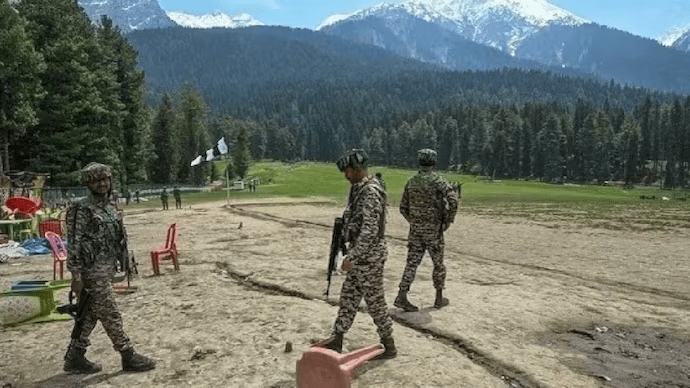
On April 22, gunmen attacked a group of indian tourists in Pahalgam, a popular tourist destination in India-administered Kashmir. Twenty-six people were killed, mostly Hindu men, making it one of the deadliest assaults on civilians in the region in decades. India quickly blamed the Lashkar-e-Taiba (LeT), a Pakistan-based terrorist group. Indian intelligence claimed to have identified two of the three attackers as Pakistani nationals. Pakistan denied involvement and demanded an international investigation.
India quickly invoked its right to self-defence under Article 51 of the UN Charter. It launched a diplomatic campaign to build legitimacy for a retaliatory military response. The government’s diplomatic corps also began lobbying international allies to support any upcoming military action. In New Delhi, leaders framed the situation as not only a matter of national security but also of sovereignty and the state’s obligation to protect its citizens from what they consider to be foreign-sponsored terrorism.
Operation Sindoor and Operation Bunyan-un-Marsoos

On May 7, India launched a series of coordinated missile strikes across the Line of Control targeting nine alleged terrorist camps and infrastructure operated by LeT and Jaish-e-Mohammad (JeM). These facilities included sites in Pakistan-administered Kashmir and the Pakistani province of Punjab. This marked the first Indian air assault on Punjab since the 1971 war, raising the stakes. The operation’s name is a reference to the vermilion worn by married Hindu women, likely chosen as symbolic justice for the “widowed” families of the slain tourists.
Indian Defence Minister Rajnath Singh emphasises that the operation had been designed to avoid civilian harm, and was not presented as an act of war, but a targeted counter-terrorism measure. However, the Pakistani government reported that at least 31 civilians were killed in the strikes, including women and children and damage to infrastructure, including a hydropower facility.
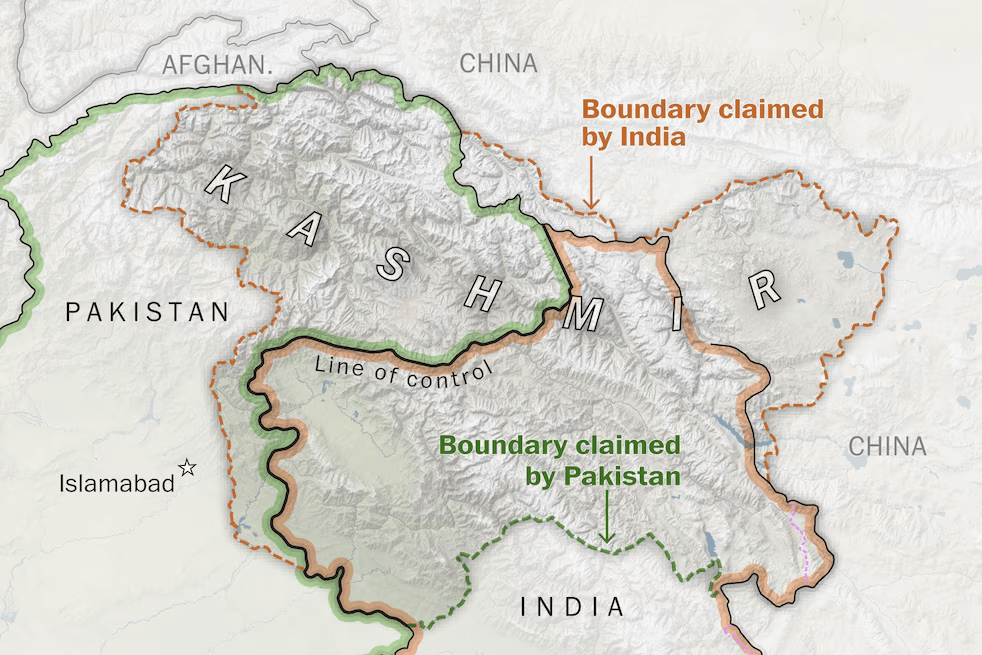
Pakistan’s military then responded with artillery shelling across the Line of Control, claimed to have shot five indian fighter jets, closed schools and declared a state of emergency in parts of Punjab and Pakistan-administered Kashmir. The government also vowed to respond “at a time, place and manner of its choosing.” Overnight exchanges of fire continued along the border, resulting in additional casualties and widespread panic in both countries.
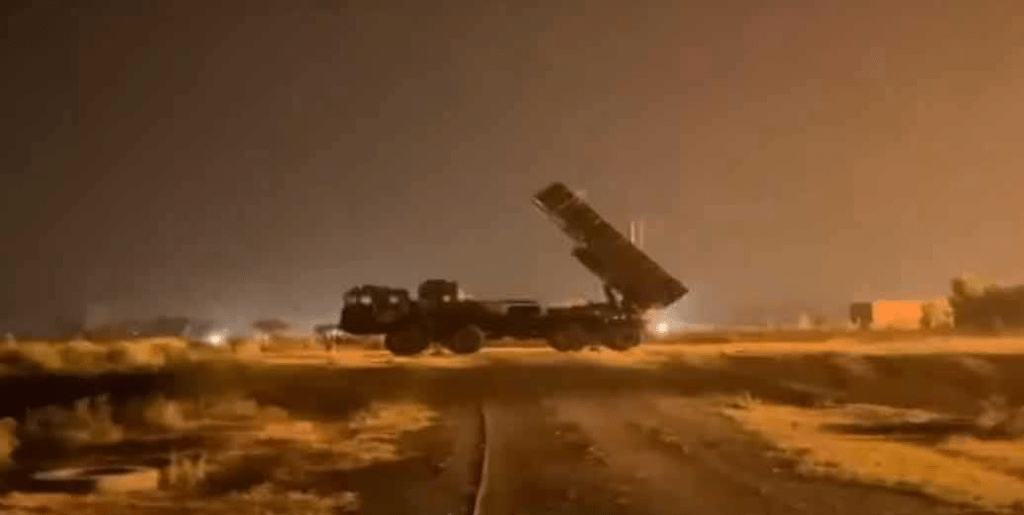
Pakistan then initiated its own military operation, named “Bunyan-un-Marsoos“, meaning a wall fortified with lead. On May 10, Pakistan used medium-range Fateh missiles to target Indian air bases in Pathankot and Udhampur and claimed to have hit BrahMos missile storage facility near Beas. Pakistan also reported intercepting Indian missiles targeting its airbases near Rawalpindi, including Nur Khan airbase, just 10km from Islamabad. Pakistani Prime Minister Shehbaz Sharif and the military leadership emphasised that special measures had been taken to avoid civilian casualties, although over 60 civilians have now been reported killed.
Strategic Implication
The current conflict has involved the use of ballistic missiles, drones and deep strikes on strategic airbases. Drone warfare has escalated, with India claiming to have repulsed multiple waves of Pakistani drones. Pakistan, in turn, has accused India of fabricating drone attacks and even bombing its own territory in Amritsar.
The conflict’s geographical spread and intensity exceed that of the 2019 Balakot strikes and have approached the scale of open war, bringing both nations closer to direct conflict between air, land and missile forces.
Conflict in a Nuclear Neighbourhood
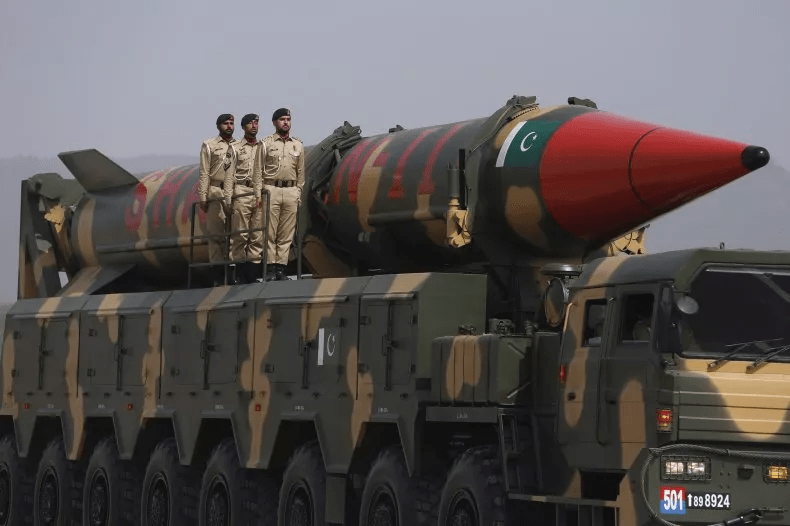
Both countries are nuclear powers. While neither government has made explicit nuclear threats, the strategic doctrine of both nations acknowledges nuclear deterrence as a baseline security guarantee. This means the conflict must be managed with extreme caution. A miscalculation could trigger a chain reaction beyond control. Indian military experts have warned that while India’s objectives were limited to neutralising militant infrastructure, Pakistan’s military will need to mount a proportional response for domestic and international credibility.
Water as a Weapon: The Indus Waters Treaty Under Strain
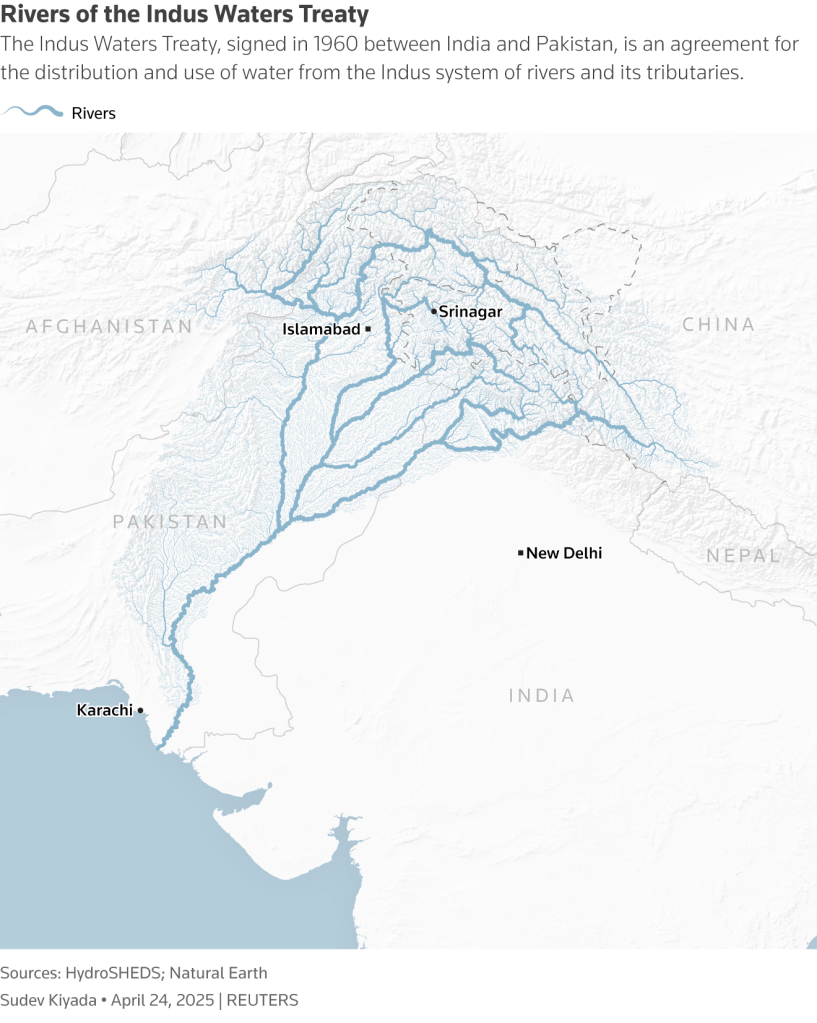
India unilaterally suspended the Indus Waters Treaty, a 1960 treaty that governs water sharing between the two nations. Pakistan has accused India of deliberately altering the flow of the Chenab River, threatening water access in agriculture-dependent Punjab. The uncertainty over irrigation access will have potential long-term consequences for regional food supplies and social stability, especially for Pakistan, one of the world’s most water-stressed countries. Pakistan stated that such actions are seen as an “act of war”.
In response, Pakistani officials have threatened to withdraw from the Simla Agreement, a post-1971 war diplomacy that institutionalised the Line of Control and laid the groundwork for bilateral resolution of disputes. Such a move would signal a formal diplomatic breakdown and strip away one of the few remaining stabilising agreements between the two countries.
Airspace, Civil Aviation, Information Warfare and Cyberspace
The conflict has disrupted air travel across South Asia and beyond. Over 50 flights were rerouted or cancelled. Airlines including Thai Airways, EVA Air, Qatar Airways and Malaysia Airlines have rerouted European-bound routes to avoid Indian and Pakistani airspace. Some carriers have warned of GPS spoofing risks, a form of cyber warfare that could mislead aircraft navigation. the Association of Asia Pacific Airlines voiced concern about escalating aviation safety risks across the region.
In the digital space, India has also been working to distribute the intelligence dossiers to International partners in an effort to prove that LeT and JeM continue to operate with impunity in Pakistan. Meanwhile, Pakistan has used its 2025-2026 seat on the UN Security Council to challenge India’s narrative and block attempts to name LeT in official UN Statements.
The conflict also rapidly spilled into cyberspace, with hacktivist groups from Asia, the Middle East and North Africa launching coordinated cyberattacks under banners like #OpIndia. Following India’s Operation Sindoor, researchers observed a 500% surge in cyberattacks against Indian targets, primarily DDoS attacks and website defacements, while Pakistan faced retaliatory strikes on government and academic websites. Over 40 hacktivist groups, including regional actors and global alliances like the “Holy League”, have joined the fray, using platforms like Telegram to coordinate digital disruption. While activity has tapered since May 7, analysts warn the cyber front remains volatile, further complicating an already dangerous geopolitical standoff.
Competing Claims and Casualty Disputes
Both India-Pakistan have begun sharing starkly different accounts of military success and losses. India’s Director General of Military Operations, Lt. Gen. Rajiv Ghai, claimed that the country’s airstrikes had eliminated over 100 militants across nine LeT and JeM training sites, adding that 30-40 Pakistani soldiers were also killed in LoC clashes. He described Pakistan’s response as “rattled,”.
Pakistan rejected this version of events. Its military reported that it had hit 26 Indian military installations in its counterstrikes and killed 40-50 Indian soldiers. While India remained silent on those casualty figures, the Indian Air Force confirmed “significant” retaliatory strikes on Saturday, though declined to confirm whether five Indian jets had been downed as Pakistan claimed. These conflicting narratives underscore the fog of war, where information warfare and domestic political optics are deeply intertwined, and where independent verification remains elusive.
Global Reaction and Mediation Efforts
US-Brokered Ceasefire
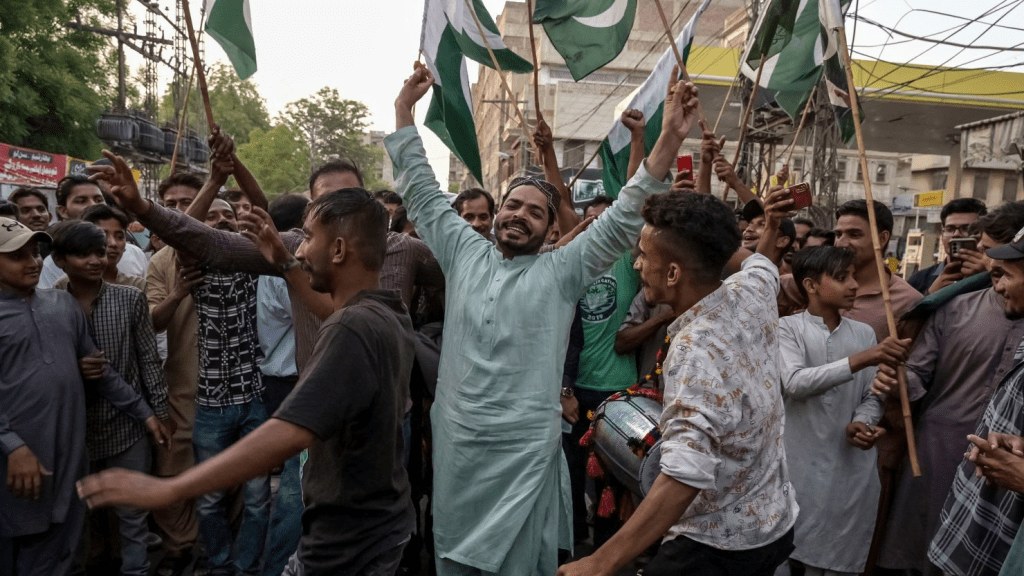
On May 11, following intensive mediation by US Secretary Marco Rubio and Vice President JD Vance, both countries agreed to a full and immediate ceasefire. The agreement was reportedly reached through direct military-to-military communication, with Pakistan initiating the contact.
President Donald Trump publicly announced the ceasefire, congratulating both countries on their decision to de-escalate. Talks are expected to continue at a neutral venue on broader issues, although Indian sources have stated there is no decision yet to enter negotiations beyond the ceasefire.
Fragile Implementation and Violations
Despite the ceasefire announcement, hours after it was announced, ceasefire violations were reported along the LoC and major urban areas like Srinagar. Indian Foreign Secretary Vikram Misri accused Pakistan of violating the agreement, while Pakistan countered that its forces were responding to Indian provocations.
Despite the ceasefire, punitive measures remain: trade and visa suspensions are still in place, and India continues to withhold participation in the Indus Waters Treaty. Both countries remain deeply sceptical of each other’s intentions, and no formal roadmap for peace talks has been agreed.
What comes next?
While both sides have publicly maintained that they seek to avoid war, the coming days are critical. There are three scenarios of possibilities:
1. Fragile Ceasefire Hold
If the ceasefire survives the coming week, facilitated by continued US engagement and quiet diplomacy, both countries may reestablish limited communication channels and restore airspace coordination. However, punitive measures like trade suspensions and visa bans are likely to remain.
2. Protracted Low-Intensity Conflict
A period of prolonged, low-intensity conflict may continue, and this could include continued artillery exchanges, cyber interference, and proxy operations in Kashmir and Balochistan. Such a scenario would strain civilian resilience and prolong diplomatic deadlock, with ripple effects on aviation, agriculture and regional markets.
3. Uncontrolled Escalation
The most dangerous, though less likely, scenario involves uncontrolled escalation caused by a second large-scale attack or military miscalculation, like a high-profile assassination, a civilian aircraft being accidentally downed, a terror attack during a sensitive moment, or accidental bombing in a civilian area. In this case, the risk of full-scale war becomes real, and normalisation may take months or longer, triggering regional or global intervention. Civilian and infrastructure losses would be catastrophic.
A Fragile Balance in South Asia
The India-Pakistan conflict in May 2025 has entered a volatile pause. The US-mediated ceasefire has halted open hostilities for now, but both sides remain on high alert amid accusations of fresh violations. The conflict has shown how quickly a regional flashpoint can spiral into a near-war, disrupting civilian lives and regional stability.
Preventing future escalations will require more than ceasefires. it demands robust dialogue mechanisms, regional cooperation, and the political will on both sides to resolve deep-rooted grievences before the next spark ignites another crisis.
 The Siren of Novgorod