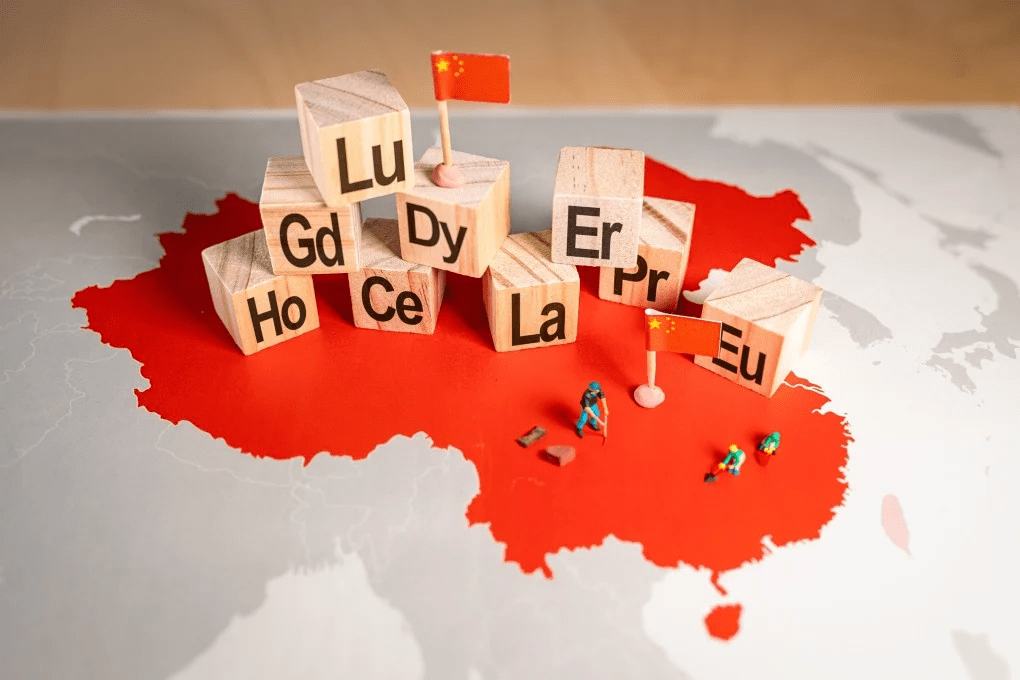
China’s rare earth controls are becoming a case for how economic power works in a more fragmented world.
Beijing has learned how to turn concentrated industrial capacity into diplomatic leverage, while keeping its measures framed as lawful export controls, national security protection, and dual-use regulation. The result is a new form of “geoeconomic pressure”, which is a licensing system that creates uncertainty, delays, compliance costs, and political signalling at the same time. This is why the response from other countries is also changing. For example, Japan, India, the US, Europe, and emerging markets are redesigning industrial policy around strategic dependence against China.
Rare earths is the new oil of the clean-tech and defence age, because a small disruption in this sector can affect much larger systems including EVs, wind turbines, robotics, data centres, semiconductors, missiles, drones, radar, and advanced manufacturing. The IEA says China accounted for 60% of global mined production of magnet rare earths in 2024, 91% of refined output, and 94% of sintered permanent magnet production. So, China’s move in rare earth industry could cause a lot of impact globally.
That concentration gives Beijing leverage and creates a dilemma; the more China uses that leverage, the more other countries will try to escape it by investing somewhere else.
What happened?

The recent trigger is Japan. China has expanded export controls on around 40 Japanese companies and organisations, citing Japan’s “new type of militarism” and concerns over dual-use items. The measures targeted entities linked to Mitsubishi Electric, Mitsubishi Heavy Industries, Kawasaki Heavy Industries, Fujitsu, Hitachi, Komatsu, Terra Drone, Japanese defence-related research institutions, and more. [1] [2]
From the political context, relations between China and Japan worsened after Prime Minister Sanae Takaichi suggested that a Chinese attack on Taiwan could become a security contingency for Japan which responded by China through diplomatic pressure, trade restrictions, travel discouragement, increased patrols, and tighter controls on critical minerals. China’s Ministry of Commerce framed the restrictions as lawful and limited to dual-use items, but the practical effect is broader; even if only specific firms are formally listed, suppliers, customers, insurers, banks, and compliance departments begin treating entire categories of Japan-linked transactions as higher risk.
Export controls do not need to fully stop trade to change corporate behaviour. If they are able to make supply uncertain enough for companies to rethink where they source, where they invest, and which governments they need to align with, corporate behaviour could likely change.
Why rare earths matter

The IEA describes the rare earth value chain as a sequence of technically demanding stages: extraction, beneficiation, chemical upgrading, separation into oxides, metal refining, alloying, and magnet manufacturing. Separation is especially important because it turns mixed rare earth feedstock into individual oxides, which then become metals, alloys, and permanent magnets. That is why simply opening new mines is not enough. A country can have rare earth reserves but still depend on China if it lacks refining, metallisation, and magnet capacity. Rare earth is significantly important for three major sectors:
- Electric vehicles: Permanent magnet is an important component for many high-performance EV motors. Global electric car sales are expected to reach 23 million in 2026, or 28% of total car sales, while China’s EV sales are expected to approach 60% of total domestic car sales.
- Defence: Rare earth magnets are used in precision-guided weapons, fighter aircraft, radar systems, submarines, and missile systems. China’s 2025 controls caused concern across strategic sectors including defence, aerospace, semiconductors, energy, transport, AI data centres, and industrial motors.
- Advanced manufacturing: Robotics, automation, sensors, power semiconductors, and AI-related hardware all depend on stable supply chains for critical inputs. China’s own localisation push in semiconductors and electronics shows that Beijing is not only controlling upstream minerals; it is also trying to deepen domestic capability across components, connectors, power semiconductors, sensors, EV systems, and AI-related hardware.
Japan and India move closer

China’s pressure on Japan is accelerating a deeper strategic alignment between Asian powers that worry about Chinese coercion.
India and Japan announced agreements covering defence, economic security, maritime security, AI, energy, shipbuilding, semiconductors, and critical technologies. Modi explicitly said that India and Japan view economic security as a shared security interest. That sentence is important as it shows how the language of “security” is moving from ships and missiles into supply chains, energy reserves, chips, and minerals. Japan brings capital, technology, manufacturing experience, and security alignment with the US. India brings scale, market growth, strategic geography, and a desire to become a manufacturing alternative to China. Japan is already one of India’s largest foreign investors, with around 1,400 Japanese companies operating in India, nearly half of them in manufacturing.The
India-Japan relationship has become an industrial hedge now, and China’s current behaviour turns economic cooperation into strategic insurance. For Japan, India offers a way to reduce overexposure to China while keeping access to a large Asian growth market. For India, Japan offers capital, technology, and credibility for its own manufacturing ambitions.
Supply chains are becoming balance sheets of power
Previously, companies only cared about efficiency; they source from wherever is cheapest and most reliable. Now, they seek resilience; they source from wherever is politically survivable, which changes capital allocation. When firms think rare earth access could be disrupted by political tension, they should start to ask:
- Can I still produce if relations deteriorate?
- Can I prove my supply chain is China-free for defence contracts?
- Can I qualify alternative suppliers before the next shock?
- Can I absorb higher input costs without losing competitiveness?
- Can I keep selling in China while diversifying away from China?
Reuters reported that corporate Japan’s warnings about rare earth risks have increased sharply, with more than two-thirds of nearly 200 filings mentioning rare earths in May and June saying export controls were already affecting business or could do so in the future. Chinese customs data also showed no exports to Japan of terbium or dysprosium oxide from November through May, with only minimal yttrium oxide shipments since December. These materials are important for creating powerful magnets, therefore the issue is entering the corporate decision-making area.
What does it mean for industries and markets
- Automotive: EV competition becomes a supply-chain competition
The EV transition is already politically sensitive because it affects jobs, trade deficits, industrial capacity, and climate policy. Rare earth restrictions make it even more complicated which making Europe to face a difficult choice. Chinese EV companies want to invest in European production, but EU policymakers worry that Chinese cleantech investment could weaken Europe’s long-term industrial autonomy. Proposed EU rules would require Chinese firms in key cleantech sectors to meet conditions such as European majority ownership, local employment, and technology sharing. Xpeng warned that if European rules make joint ventures too difficult or expensive, Chinese firms may simply export finished cars from China and pay the tariffs instead. That would be a lose-lose outcome: Europe gets fewer local jobs and less technology transfer, while Chinese companies keep production concentrated at home.
- Defence: mineral security becomes defence readiness
Defence companies are especially exposed because they need high-reliability components and politically compliant supply chains. The US is already moving to rebuild rare earth processing, metallisation, alloys, and magnet capacity. Industry reporting says the US Army selected REalloys to build and operate a heavy rare earth processing complex at Tooele Army Depot in Utah, targeting dysprosium and terbium, with initial operating capability expected by 2028. The strategic lesson is clear: defence resilience cannot be built only at the final assembly stage, it has to include minerals, processing, metals, alloys, magnets, testing, and qualification.
- Semiconductors and electronics: localisation pressure intensifies
China’s semiconductor equipment rally and the localisation push in components show that Beijing is responding to foreign controls with its own industrial deepening. Chinese chip equipment firms tracked by Soochow Securities recorded combined revenue of RMB 90 billion in 2025, up 35% year on year, while first-quarter 2026 revenue rose 32% and net profits rose 61%. At Electronica Shanghai 2026, Chinese firms showcased products across connectors, power semiconductors, sensors, AI servers, EV systems, green energy storage, and 6G communications. This is important because China is trying to reduce its dependence on foreign technology while preserving other countries’ dependence on Chinese-controlled inputs.
- Markets: the premium moves from efficiency to security
Investors should expect a growing valuation premium for companies that can prove supply-chain resilience. This could benefit miners, refiners, magnet makers, recycling companies, equipment providers, and firms with credible non-China supply. However, it may also raise costs for downstream manufacturers. The IEA reported that after China’s April 2025 controls, rare earth prices in importing countries remained elevated even after trade volumes recovered, with European prices reaching up to six times Chinese prices. The price gap shows that strategic independence is expensive.
The risk for China

China has real leverage, but it is not unlimited. Rare earth controls are a double-edged sword. They can create short-term pressure, but repeated use encourages other countries to accelerate diversification. The Institute of Geoeconomics argues that China has an incentive to use the rare earth card while its advantage persists, but excessive use could accelerate alternative supply networks and weaken China’s long-term position, which is a paradox of economic coercion.
That is why Beijing’s current strategy appears calibrated. It does not always impose a total ban; it uses licensing, entity lists, watchlists, end-use reviews, and selective pressure. This allows Beijing to signal displeasure, impose friction, and retain plausible legal framing without necessarily triggering a full-scale economic rupture. However, the more this pattern spreads, the more other governments will treat Chinese supply dominance as a national security vulnerability.
Winners and losers

The likely winners are countries and companies that can provide credible alternatives.
- India could benefit if Japanese, European, and US firms increase manufacturing and technology investment there. The India-Japan economic security roadmap is important because it gives India a stronger role in Asia’s supply-chain redesign.
- Australia, Canada, and the US could benefit from allied investment in mining, refining, processing, and magnets, although building midstream capability will take time. The USGS estimates 2025 rare earth mine production at 270,000 tonnes for China, 51,000 tonnes for the US, and 29,000 tonnes for Australia, showing that alternatives exist but remain far smaller than China’s position.
- Europe faces the hardest trade-off; it wants Chinese EV investment, affordable clean technology, industrial jobs, and strategic autonomy at the same time.
- Japan is exposed in the short term because its advanced manufacturing base depends on stable critical mineral inputs. They are then pursuing allied supply deals, recycling, stockpiling, and deep-sea projects, but several of these options will take years to produce commercial-scale results.
- China remains the dominant player, but it risks pushing customers and governments to pay higher prices for non-China supply.
Recommendations for private companies and governments
For private companies:
- To treat critical minerals as a strategic risk, not just a procurement issue. Companies should map exposure not only to direct suppliers, but also to sub-tier suppliers, magnets, components, processing technology, and end-use licensing risk. A company may not buy rare earths directly but still rely on components that contain them, as seen in Japanese corporate disclosures.
- Companies need dual sourcing before the crisis. Waiting until export licences are delayed is too late because alternative rare earth oxides, metals, alloys, and magnets often require qualification before they can be used in high-performance products.
- Firms should build “geopolitical clauses” into procurement and customer contracts. This includes force majeure language, alternative sourcing rights, inventory commitments, and price-adjustment mechanisms for politically driven input shortages.
- Boards should ask management for a China exposure dashboard. This should cover revenue exposure, supplier exposure, regulatory exposure, sanctions/export-control exposure, and replacement timelines.
- Companies in EVs, defence, electronics, robotics, and renewables should engage governments early. In this market, private supply-chain resilience often depends on public tools: subsidies, stockpiles, offtake guarantees, permitting reform, and allied financing.
For governments:
Processing, separation, refining, metallisation, alloying, magnet manufacturing, equipment, skilled labour, environmental permitting, and customer qualification also become bottlenecks. The IEA notes that the project pipeline outside China is uneven, with mining capacity expanding more easily than the rest of the value chain. Therefore, governments should avoid confusing mining policy with supply-chain policy, which means policy should focus on:
- Build allied processing and magnet capacity, not just mines.
- Create strategic stockpiles for heavy rare earths such as dysprosium and terbium.
- Use public procurement to create guaranteed demand for non-China supply.
- Finance recycling and substitution technologies.
- Coordinate export-control responses with allies instead of reacting country by country.
For Asia, the India-Japan partnership could become one of the most important platforms and models of cooperation. It links capital, technology, scale, geography, and shared concern over China’s coercive capacity, so it’s better to build (or join) something like this.
For Europe, the challenge is more delicate. Blocking Chinese investment too aggressively may protect autonomy, but slow clean-tech deployment and raise costs. Accepting Chinese investment without conditions may preserve jobs in the short term but deepen long-term dependency. The smarter route is conditional openness: welcome investment, but require local employment, transparent governance, diversified sourcing, and technology partnerships that build European capability.
By controlling key chokepoints in the clean-tech and defence supply chain, Beijing can create pressure without firing a shot and necessarily breaking trade rules outright. Companies are discovering that the cheapest supplier is not always the safest supplier. That is why rare earths are reshaping alliances: Japan is moving closer to India, the US is rebuilding domestic mineral capacity, and Europe is debating how much Chinese investment it can accept without surrendering industrial autonomy.
The world is learning that industrial policy is now also a foreign policy. In this new environment, supply chains are no longer just about efficiency; they also become maps of power.
Note: the links to the sources of information is in the text
 The Siren of Novgorod