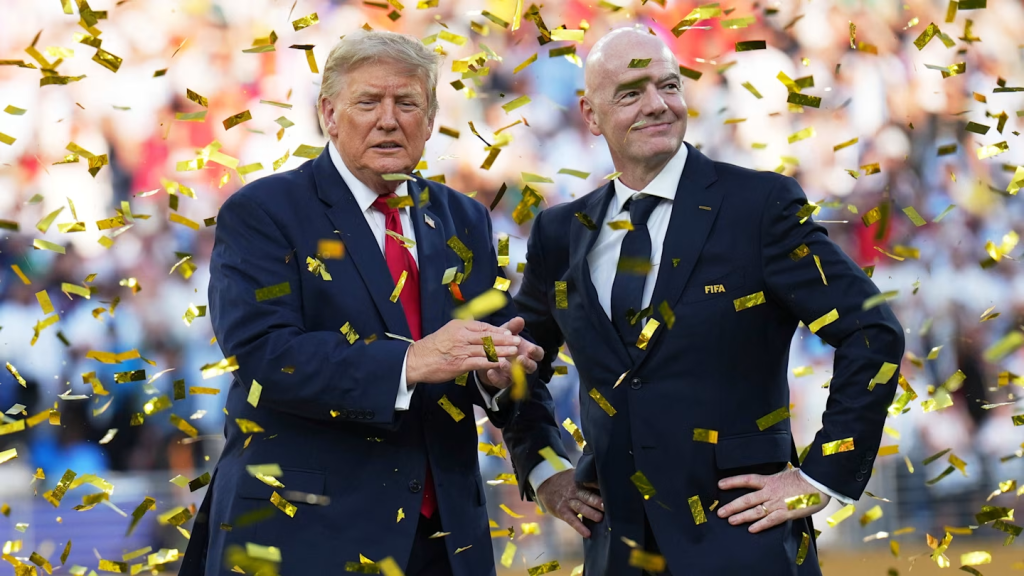
FIFA’s plan to bring private investors into the company to manage its major competitions has been described as either a bold development programme or selling football’s soul from the people to billionaires.
The World Cup is already a vast commercial operation built on broadcasting rights, sponsorship, ticketing, hospitality and licensing. Investors in theory would not literally buy a trophy or acquire formal authority over football’s rules either. However, the big change is that FIFA wants to turn the future income of the World Cup and its other competitions into an asset that investors can own. At the same time, FIFA retains the power to make decisions that determine how valuable that asset becomes. It is actually a partial privatisation of FIFA’s tournament economy, and it should not be approved in its present form.
It is for the development funding! Or so they claimed…

FIFA proposes creating FIFA Forward Enterprise (FFE), a subsidiary that would combine its commercial and tournament operations [1]. Private investors could buy up to 21 per cent of an entity valued at approximately $20 billion, raising around $4.2 billion [2]. FIFA would retain majority ownership, and sporting rules, competition formats and the international calendar would remain under its exclusive control. Thrive Eternal, linked to investor Joshua Kushner, is expected to lead the investor group, while JPMorgan is going to be the advisor.
The proceeds would support a large increase in development funding. Each of FIFA’s 211 associations could gain access to as much as $20 million in immediate project funding, while regular grants would rise from $8 million to $20 million during the 2027–30 cycle and increase again in later cycles. FIFA presents this as the “democratisation” of football’s commercial wealth [3].
Let’s think about this: for England, Germany, Norway, Sweden, Switzerland or France for example, another $20 million may be useful but not transformative. For a smaller federation in Africa, Asia, the Pacific or the Caribbean, it could pay for training centres, pitches, coaching, women’s leagues, youth systems and national-team participation in big competitions [4].
UEFA (Union of European Football Associations), with its 55 National Associations, is opposed to it, but nor should UEFA’s opposition automatically be accepted as an entirely selfless defence of the game. European leagues and clubs control much of football’s revenue, talent and broadcasting power. Larger FIFA competitions could compete with UEFA’s Champions League and further crowd the European calendar, which becomes a competition for UEFA. So, the dispute is also a struggle between two powers: FIFA, which has the votes of 211 national associations, while Europe controls a disproportionate share of football’s commercial economy [5]. The proposal could genuinely redistribute resources towards countries that have historically received less from global football. However, a good objective does not make every financing method acceptable.
FIFA is selling tomorrow’s income for money today

The $4.2 billion is not free development money. Investors will provide it because they expect to earn a return through dividends, an increase in the value of their shares or an eventual sale. FIFA would therefore be exchanging part of its future commercial income for a large payment today.
That may be reasonable when an organisation urgently needs capital, but FIFA is already generating record revenues [3]. Economists would describe the future income it gives up as an opportunity cost: the value lost by taking immediate cash instead of retaining full ownership. The real cost of the deal is therefore not captured by the $4.2 billion headline, because it also includes decades of dividends and future growth that would flow to investors rather than back into football.
This raises a basic question: why should FIFA permanently share the future growth of its most valuable competitions when it could increase development spending through existing revenues, reserves, borrowing or a commercial subsidiary that remains wholly owned?
The problem is that the proposed terms remain largely undisclosed, so member associations cannot properly assess the answer. They do not yet have enough public information about dividend rights, investor protections, board representation, exit arrangements, the valuation method or FIFA’s ability to repurchase the shares. Which is important because FIFA may be selling part of the World Cup’s future income for less than it will ultimately be worth.
The lack of disclosure also creates an information asymmetry: FIFA, its advisers and potential investors know far more about the transaction than the associations being asked to approve it. Without access to the full terms, those associations cannot judge whether the deal offers fair value or creates obligations that will be difficult to reverse. If FFE’s value rises from $20 billion to $40 billion, the value of the investors’ stake could double even before they receive dividends. FIFA would have exchanged a permanent share of football’s future growth for a one-off payment spent by today’s officials.
The deal also encourages short-termism. Today’s federation leaders would receive funding and political credit immediately, while the real costs, like the reduced future income, weaker ownership and the difficulty of reversing the arrangement, would emerge years later. The officials approving the transaction may therefore enjoy its benefits without remaining in office long enough to bear its full consequences.
Minority ownership can still change behaviour
FIFA’s central defence is that investors would hold only a minority, non-controlling stake. Legally, that distinction matters, economically, however, it does not remove the conflict. Investors would not need direct control over FIFA’s rule book to influence the company. They could receive board representation, access to information, contractual protections and regular contact with management. The main problem remains, let’s say investors never interfered, but FIFA itself would have a financial interest in making FFE more valuable because it would remain the company’s majority owner.
Economists describe this as a principal–agent problem. FIFA is supposed to act as a steward for the wider football community, including players, supporters, clubs and national associations. Yet its own institutional interests may not always match theirs. As the controlling owner of FFE, FIFA would benefit financially when the company grows, even when that growth comes from decisions that make football more expensive, overcrowd the calendar or place greater pressure on players. The commercial logic is straightforward. More teams create more matches, create more broadcasting hours, ticket sales, sponsorship exposure and hospitality income, which then increases the value of FFE.
A 64-team World Cup, or more frequent competitions, would therefore become financially attractive. A football-finance expert told the BBC that an investor-backed FFE would face pressure to expand because it would need to produce returns for shareholders [4]. FIFA would therefore be both the regulator deciding how much football should be played and the controlling owner of a company rewarded when more football is sold. Its sporting authority and financial incentives would both push towards continuous commercial expansion.
We need to know that decisions that may be good for football can be bad for the company’s value: preserving the World Cup’s four-year rhythm may protect its special status but limit revenue, fewer matches may protect players but reduce broadcast income, and lower ticket prices may improve access but weaken profits. The conflict is therefore structural. It does not depend on investors secretly controlling FIFA, nor does it disappear because FIFA promises to act in the game’s best interests. The governance model itself would reward the same institution for expanding the competitions it is supposed to regulate.
When a governing responsibility becomes a financial asset
FIFA is a non-profit association whose stated purpose includes promoting football’s educational, cultural and humanitarian values. FFE would introduce a different value due to the commercial mindset. A governing body should have ask: What is the best way to protect and develop the game? but FFE, as an investable company will ask: how can this portfolio keep growing and producing returns?
Better broadcasting, stronger management and wider global access could benefit both investors and football, but they can also diverge. Lower ticket prices may improve access while reducing revenue. Fewer matches may protect players while limiting broadcast income. Rejecting a wealthy host may preserve sporting principles while sacrificing commercial opportunity. This is what financialisation means in practice. FIFA is no longer just organising a football tournament; it is now creating an investment that becomes more valuable when the tournament generates more revenue. That creates pressure, whether intentional or not, to favour decisions that increase commercial returns, even when they are not necessarily the best decisions for the game.
Michael Sandel’s work on the moral limits of markets (What Money Can’t Buy) helps explain why this becomes a problem. Sandel argues that markets do not merely distribute goods; they can change how those goods are understood and valued. Market thinking can “crowd out” the non-market norms that previously governed an activity. Applied here, the concern is not merely unfairness (investors would gain rights that supporters and players do not possess). It is also corruption in Sandel’s philosophical sense: turning the World Cup into an investment may gradually change its purpose.
The competition that we know, love and celebrate every four years would become more a commercial platform whose capacity must be used, expanded and monetised.
A vote is not automatically democratic

FIFA says its member associations will decide the proposal democratically. Formally, each association has a vote, but equal votes do not always mean equal freedom to choose. Many smaller federations depend heavily on FIFA funding, and for them the promised payments would be worth several times their normal annual revenue [6]. In other words, they are being asked whether to approve a permanent change to how football is governed, while knowing that saying “yes” could mean giving up funding they urgently need today. So, the voting process contains a strong financial pressure: approve a permanent institutional change and receive an immediate material reward; it is almost like a bribe. Does it sound democratic for you?
Political economists would recognise elements of patron-client politics, in which a powerful centre distributes resources to dependent members whose support it needs. The problem is not redistribution itself, but tying development funding to consent for a transaction that will reshape FIFA’s governance for decades.
The process has also lacked adequate consultation. UEFA, CONCACAF (The Confederation of North, Central America and Caribbean Association Football), the Asian Football Confederation and several national federations said they learned important details through public reporting rather than established governance channels [3] [7] [8] . While we know that a good decision requires having enough information, time and independence to give out consent.
Fans create the value but investors receive the rights
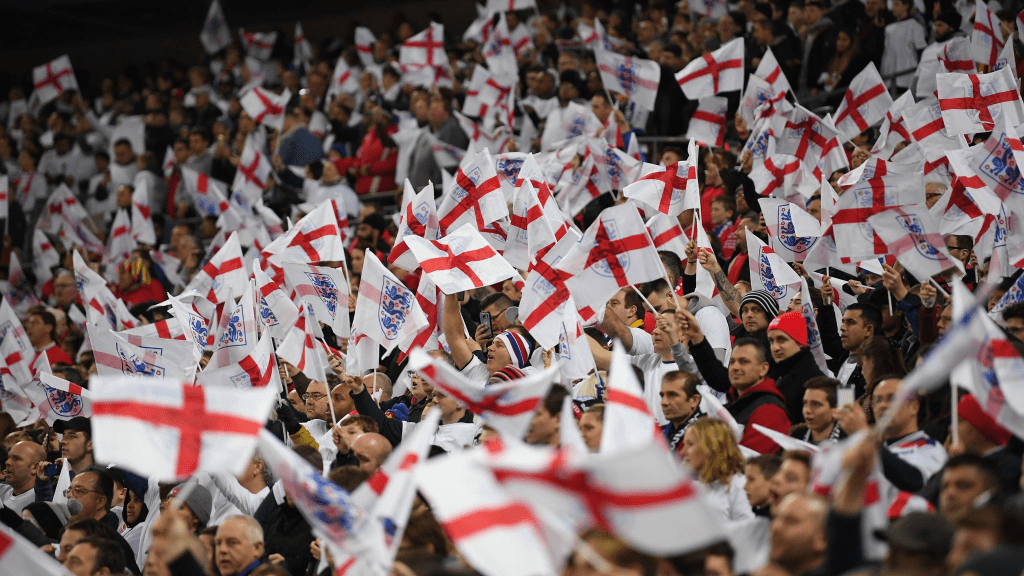
The World Cup’s value is created collectively. FIFA organises and commercialises the tournament, but players create the spectacle, clubs develop much of the talent, supporters give it atmosphere, meaning and global loyalty, and host societies often provide infrastructure, public services and public funding. Yet the proposed arrangement would not distribute governance rights according to those contributions. Private investors would receive enforceable financial claims through ownership and contract, while most of the people who create the tournament’s value would receive no equivalent voice over how that value is used.
Football supporters are not ordinary customers. Their inherited loyalties, rituals, travel, volunteer work and emotional attachment help create the cultural value that FIFA later sells. Research by Winell et al. in 2022 [9] reviewing 42 studies found that commercialisation can significantly affect fan identity, emotions, attitudes and behaviour. But fans would have no formal governance role in FFE. Players, whose bodies and careers make the competitions possible, would also have no direct vote. This imbalance is important because ownership shapes whose interests are protected most clearly. Investors would have legal rights and expectations of financial returns. Supporters and players would largely be left with moral claims, public criticism and the threat of protest.
The likely social consequences that follow from that imbalance is the pressure to increase revenue, which could encourage more premium hospitality, higher ticket prices, fragmented broadcasting subscriptions and host locations chosen partly for their commercial potential. More tournaments and matches could also intensify the physical and mental demands placed on players. FIFPRO Europe has warned that turning FIFA competitions into investable assets would fundamentally alter the incentives behind the tournaments in which players work [8].
The concern, therefore, is the fact that those who contribute capital would gain the strongest formal rights, while those who create much of football’s sporting and cultural value would remain largely outside the decision-making structure.
Reform the idea, reject the deal
A dedicated commercial subsidiary is not inherently wrong. FIFA could keep FFE wholly owned, hire professional management, improve transparency and distribute more revenue to poorer associations.
External investment should be considered only after full publication of the proposed contracts, an independent valuation, competitive bidding, clear repurchase provisions and binding limits on investor involvement. Players, supporters, clubs and leagues should receive representation. Development funding for grassroots, youth and women’s football should be protected and independently monitored. A change of this scale should also require a supermajority rather than a simple majority. Until those safeguards exist, the proposal should be rejected.
FIFA is socialising the justification while privatising part of the upside. The global football community is promised development funding today; private investors receive a lasting claim on revenues that the community will generate tomorrow.
The World Cup does not need protection from all commerce. It needs protection from a system in which making it larger, more frequent and more expensive becomes an obligation owed to private capital.
 The Siren of Novgorod